

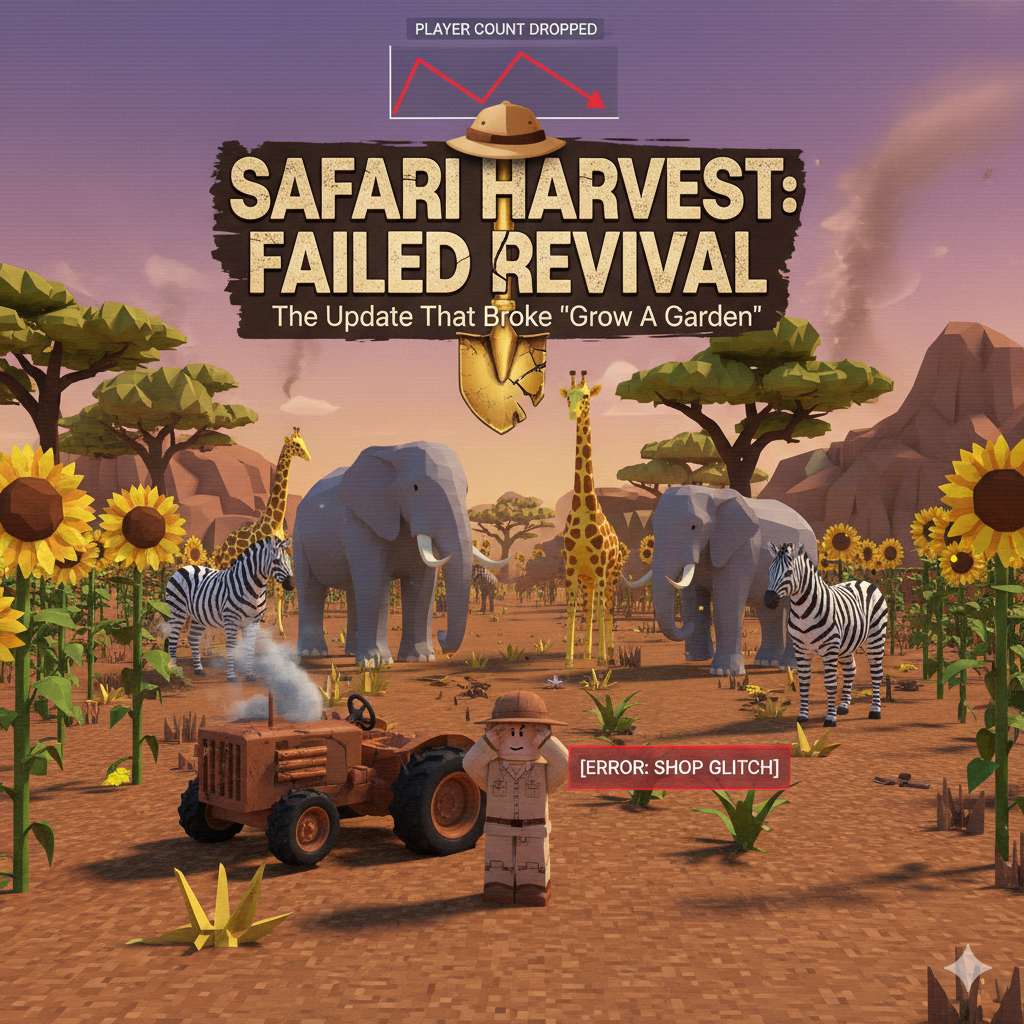
Its “Safari Harvest” update was met with significant community anticipation, with players hoping for the transformative experience that would finally elevate the game to a must-play status. The Roblox platform is populated by “sleeping giants”—games that possess massive potential, a dedicated player base, and a core concept that is just one significant update away from “revival.” Grow a Garden was long considered a prime candidate for such a comeback.
But did it deliver? The hype for new content was real, but the player feedback and a detailed review of the experience tell a complex and cautionary story. This article provides a deep-dive analysis of the Safari Harvest update, examining its new features, performance, and impact on the core gameplay loop. It seeks to answer the one question on every player’s mind: Did this update actually revive Grow a Garden?
Based on a granular analysis of the update’s features, technical performance, and its ultimate effect on the core player experience, the answer is a definitive no. The Safari Harvest update, while visually ambitious, ultimately fails as a “revival.” It functions as a superficial “re-skin” that not only “doesn’t fix core issues” but also introduces severe, “unplayable” technical problems that actively damage the player experience.
The New Horizon: A First Look at the ‘Safari Harvest’ Content
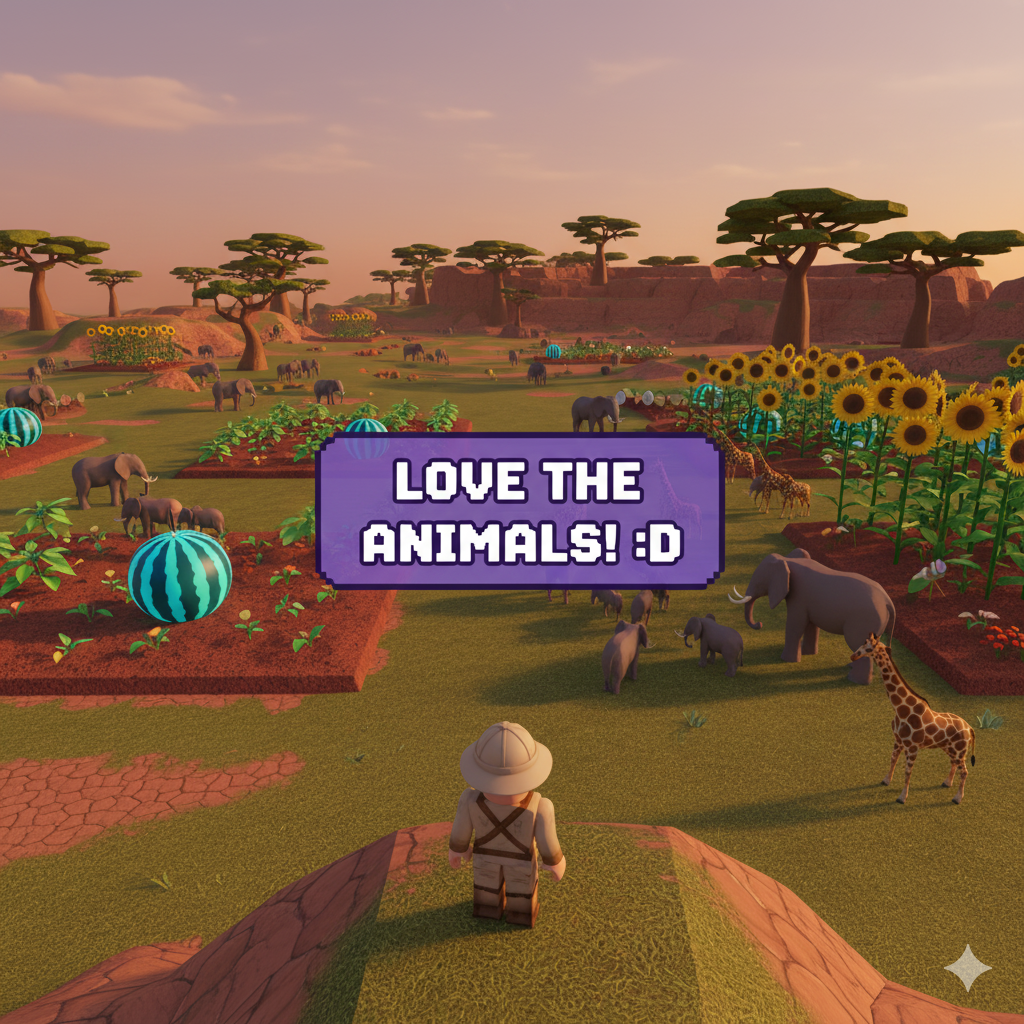
Any attempt at a game revival hinges on its “honeymoon phase”—the initial hours where returning players are captivated by new content. The Safari Harvest update centered its entire marketing and appeal on a wave of new assets, which, at first glance, seemed promising.
New Biomes and Animals: A “Cool” First Impression?
The update immediately introduces its “Safari Harvest” theme with a “new biome” and “new animals”. This new content serves as the primary hook for returning players, and the initial reaction to the visual overhaul is positive. The creator’s first impression notes that “it looks cool”, and the added “variety” from the new animals is explicitly praised, generating a “love the animals” sentiment. This new thematic layer also extends to the core gameplay, introducing “new seeds” and “new crops” for players to cultivate.
This initial appeal is critical. To “revive” a game, an update must first succeed in capturing the player’s attention. The positive reception to the assets—the art style, the safari theme, and the new creature models—demonstrates that the developers successfully created a marketable and visually appealing package. This new content generates the crucial, short-term excitement needed to bring lapsed players back. The problem, as it unfolds, is whether these new assets are supported by any new substance.
The Problem of “Empty”: Why New Biomes Weren’t Enough
The initial excitement generated by the new visuals is almost immediately undercut by a glaring design flaw. After praising the new Desert and Savannah biomes, the player delivers the first major blow to the “revival” narrative: “it feels empty”.
This single observation is more than just a passing critique; it is an indictment of the update’s entire design philosophy. The “empty” feeling is not a bug but a fundamental design choice. The developers created a large, visually distinct new map but failed to populate it with meaningful content. The vast new zones lack interactive elements, points of interest, hidden discoveries, or any new gameplay mechanics that would encourage exploration.
This emptiness immediately invalidates the “exploration” pillar of an open-world-style update. When a player, drawn in by the promise of a new world, finds “not much to do” within the first few minutes, their engagement collapses. This design failure forces the player to abandon any hope of exploration and revert to the only gameplay loop the game offers: the core grind. The update, therefore, transitions the player from “explorer” to “worker” almost instantly, which is a critical failure for long-term player retention.
The New Gameplay Loop: Faster Grinding, Same Destination
With the “exploration” aspect of the update exposed as shallow, the analysis must turn to the “gameplay” aspect. A successful revival would, at minimum, refine or expand the core loop to make it more engaging. The Safari Harvest update, however, demonstrates a fundamental misunderstanding of what players found lacking in the original game.
Planting, Harvesting, and Selling: The Core Loop Re-Examined
The player’s actions confirm that the core gameplay loop is entirely unchanged. Players are still “planting new seeds”, “harvesting huge fields”, and transporting their goods to the “new shop area” to “sell”. This loop is later confirmed with the explicit summary that the game is “just planting and selling”.
The update did not change this loop; it only added new assets (seeds, crops) to the existing one. This is the “more of the same” fallacy. The core problem that leads to player drop-off in “simulator” or “tycoon” games is the repetitive, “grindy” nature of the loop. Players leave when this grind is no longer rewarding or engaging.
The “Safari Harvest” update’s solution to this “boring grind” problem was, bafflingly, more grind. “Harvesting huge fields” implies the scale of the grind increased, but the activity itself did not evolve. This approach reveals a critical misunderstanding of the player base’s desires. Players were not asking for more planting; they were asking for more to do besides planting.
The Tractor: A Quality-of-Life Feature or a Crutch?
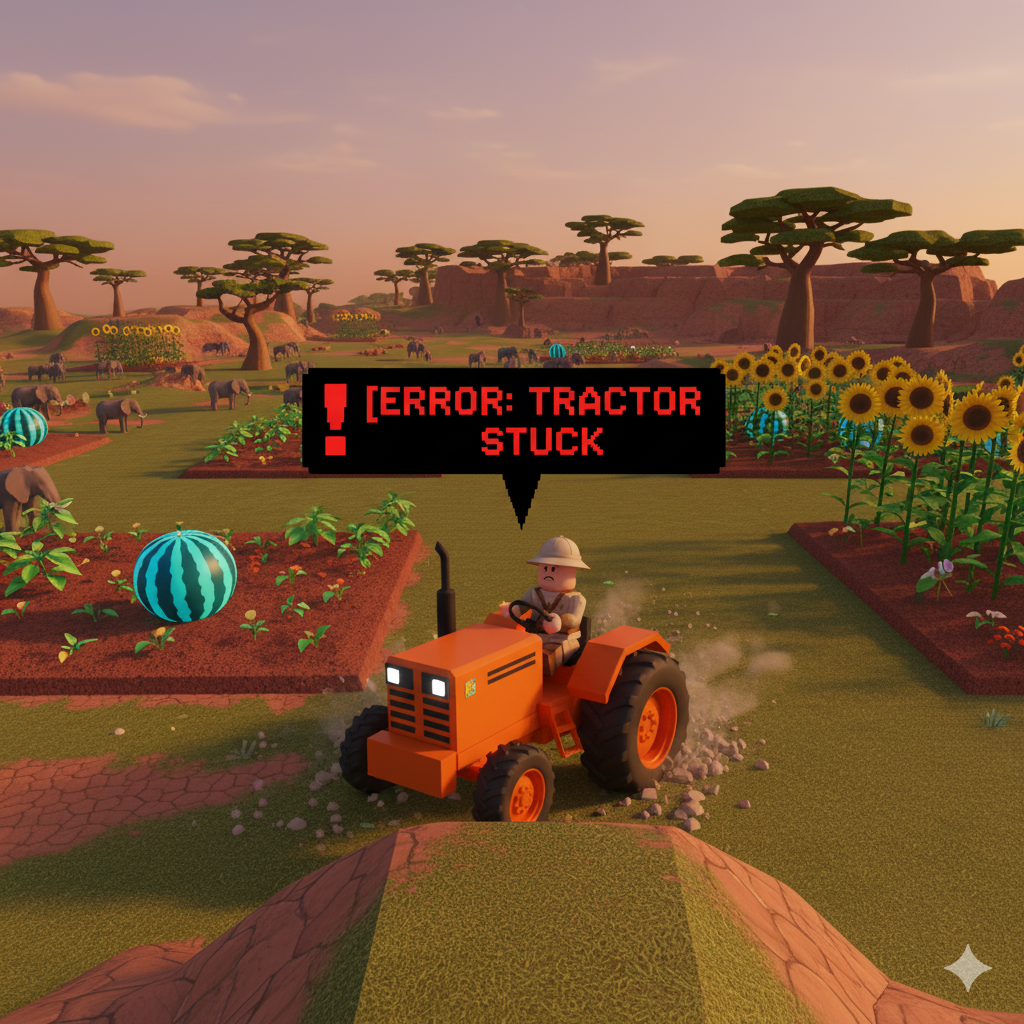
The “new tractor” is introduced as one of the update’s major new features, with the stated purpose of providing “faster transport”. A vehicle was added to help players navigate the (now larger and “empty”) new biomes and, more importantly, to speed up the core loop of “planting and selling”.
An analysis of this feature reveals it to be an admission of a flawed loop rather than a new, engaging mechanic. The tractor is not a gameplay system—there is no indication of customization, racing, or new farming techniques (like automated planting or harvesting). It is a Quality-of-Life (QoL) patch designed to mitigate the tediousness of the existing mechanic.
The inclusion of the tractor is an implicit acknowledgment by the developers that their core loop is fundamentally boring and time-consuming. Instead of fixing the boring loop (e.g., by adding automated transport, hired workers, or a new progression system), they added a tool to make the boring loop slightly less slow. This “faster transport” is a band-aid on the “just planting and selling” problem, not a solution.
The Collapse: How Bugs and Lag Made ‘Grow a Garden’ “Unplayable”
If the update’s new content was merely shallow, it could have been dismissed as a missed opportunity. However, the problems run far deeper. The new content, layered on top of the old foundation, results in a catastrophic technical failure that fatally undermines the entire “revival” attempt.
“The Game is So Laggy”: Performance Issues Cripple the Experience
The single most damning piece of evidence from the entire review is the declaration: “The game is so laggy, it’s almost unplayable”.
This one sentence renders all other analysis secondary. A “revival” update is meant to bring players back and retain them. A technically broken game drives them away. The new biomes, the new animals, and the tractor are the very cause of this new, crippling lag. This indicates that the developer’s ambition exceeded their technical grasp; they successfully added new visual assets but failed to optimize them, resulting in a core experience that is “unplayable”.
A player cannot be “revived” if they literally cannot play the game. This technical failure is not a minor issue; it is the “revival killer.” It ensures that any new or returning player, drawn in by the promise of new content, will have an immediate negative experience and is highly likely to quit, perhaps permanently.
A Cascade of Glitches: From Despawning Animals to Broken Shops
The “unplayable” lag is not an isolated issue. It is the symptom of a systemic breakdown, compounded by a “cascade of glitches” that directly attacks every single new feature the update promised.
- The New Animals: The “love the animals” sentiment is immediately nullified by a bug that makes “they keep despawning”. The cosmetic feature, intended to add life and immersion to the “empty” biomes, is broken.
- The New Tractor: The QoL feature designed to make the grind less tedious actively makes life worse. The “faster transport” promise is broken when “the tractor gets stuck a lot”, adding a new layer of frustration and wasting player time instead of saving it.
- The New Shop: This is the most catastrophic failure. The entire purpose of the “just planting and selling” loop is to… sell crops. The “new shop area” is the destination for this loop. But the shop “is glitchy,” and, as a result, the player “can’t sell” their crops.
This is not a random assortment of bugs; it is a systemic cascade failure. The cosmetic feature (animals) is broken. The QoL feature (tractor) is broken. And, most critically, the core reward mechanism (the shop) is broken.
The update is, therefore, a “negative-sum” change. It has not only failed to add playable new content, but it has actively broken the old, functional (if boring) loop. The game is, by this metric, worse than it was before the “revival” was attempted.
Safari Harvest: The Promise vs. The “Unplayable” Reality
To visualize the disconnect between the update’s marketed promise and the documented player experience, the following table contrasts the new features with their “in-game” reality.
| Promised Feature (The “Hype”) | Experienced Reality (The “Failure”) | Snippet Evidence |
| New, “Cool” Biomes | Vast, visually distinct new areas. | “feels empty” “not much to do” |
| New Animals & Variety | More creatures to populate the world. | “love the animals” …but “they keep despawning” |
| New QoL Vehicle | A tractor for “faster transport”. | “the tractor gets stuck a lot” |
| New Sales Economy | A “new shop area” to “sell crops”. | “shop is glitchy” “can’t sell my crops” |
| New, Bigger Harvests | “Huge fields” and “new crops” to grow. | “just planting and selling” (The same loop) |
| A Revived Game | A polished, playable, engaging new experience. | “the game is so laggy” “it’s almost unplayable” |
The Verdict: Why This “Re-skin” Failed to Revive ‘Grow a Garden’
Synthesizing the evidence from the new content, the unchanged gameplay loop, and the catastrophic technical failures, a final verdict can be rendered. The Safari Harvest update did not fail because it was small; it failed because it was hollow and broken.
“Just a Re-skin”: The Core Issues ‘Grow a Garden’ Ignored
The player’s final verdict is the most accurate: “It’s just a re-skin”. This update “doesn’t fix core issues”. This assessment perfectly captures the update’s superficial nature. It changed the look of the game but did nothing to address the feel or function.
The evidence allows us to define the “core issues” that the developer ignored:
- A Shallow, Repetitive Loop: The game’s primary problem was that it was “just planting and selling”. A “revival” would have added new, interlocking systems (e.g., animal breeding, quests, a town-building mechanic). This update only gave players “new seeds” for the same, monotonous loop.
- A Lack of Engaging Content: The original world, and now the new one, “feels empty”, leaving players with “not much to do”.
A “re-skin” is the opposite of a “revival.” A revival fixes the foundation; a re-skin just paints the crumbling walls. The developer mistook adding content (new visual assets) for adding gameplay (new systems), a fatal error in judgment.
The Data: “Player Count Dropped”
The most objective, undeniable metric for the update’s failure is presented in the review: the “player count dropped“.
A successful revival update, even a mediocre one, should produce a spike in player count, followed by a gradual decline. The observation that the “player count dropped” suggests that the update either failed to produce a spike at all or, more likely, that the spike was met with an immediate and severe crash.
The “unplayable” lag and game-breaking bugs are the clear cause. New and returning players, lured by the “cool” new theme, logged in, experienced a broken game, and left immediately.
This is the “revival backfire.” The update did not just fail to save the game; it actively damaged its reputation and drove away the very players it was meant to attract. This is the data-driven reason behind the conclusion that the update “won’t save the game”.
Conclusion: A “Bright Future” or a Failed Harvest?
The analysis of the Safari Harvest update paints a bleak picture of a failed “revival” attempt. However, the review ends on a contradictory note that must be addressed.
Reconciling the Verdict: Why the “Future is Bright”?
After an exhaustive list of failures—from the “empty” world, to the broken shop, to the “unplayable” lag, to the final “re-skin” verdict—the review concludes with the statement, “the future is bright”.
This final statement cannot be taken as a data-driven conclusion. It is a clear case of emotional dissonance. The analysis is in S_S11 (“unplayable”), S_S12 (“re-skin”), and S_S13 (“player count dropped”). The hope is in S_S15. This is the polite, optimistic sign-off of a content creator who wants the game to succeed and must maintain a degree of optimism for their audience.
As analysts, we must separate the two. The “bright future” is not a result of this update; it is a conditional possibility that can only be achieved if the developers completely change course. This future can only exist if the developers first fix the new technical problems this update introduced (the lag, the bugs) and then finally address the “core issues” that this update ignored.
Did ‘Safari Harvest’ Revive ‘Grow a Garden’?
No. The “Safari Harvest” update categorically failed to revive Grow a Garden.
The evidence is overwhelming. The update was a superficial “re-skin” that did not address the game’s shallow core loop and “empty” world. Worse than just failing to add content, the update subtracted from the experience by introducing crippling, “unplayable” lag and a cascade of bugs that broke the game’s fundamental mechanics, from animal spawns to the tractor to the ability to sell crops.
A “revival” requires a game to be, at a minimum, playable. By failing this most basic test, the Safari Harvest update proved to be a failed harvest, leaving players with empty fields and a “bright future” that now feels further away than ever.
What was your experience with the Safari Harvest update? Did you encounter the same “unplayable” lag, or do you think the new content is enough? Share your thoughts in the comments below.
I don’t think the title of your article matches the content lol. Just kidding, mainly because I had some doubts after reading the article. https://www.binance.com/es-AR/register?ref=UT2YTZSU
https://shorturl.fm/3B81A
Thanks for sharing. I read many of your blog posts, cool, your blog is very good. https://accounts.binance.com/ar-BH/register?ref=S5H7X3LP
Turn your traffic into cash—join our affiliate program!