


1. Executive Summary and Contextual Framework
The digital ecosystem of Grow a Garden has historically operated as a quintessential tycoon simulator, characterized by solitary progression loops, asynchronous resource accumulation, and localized inventory management. However, the introduction of the “Farmers Market” update represents a seismic shift in the game’s operational paradigm. This report provides an exhaustive analysis of this update, arguing that it transitions the experience from a linear growth simulator into a complex, multi-variable economy.
The update introduces a dedicated “Trading World,” a hard-currency pegged trading medium (Trading Tokens), a sophisticated market transparency tool (Recent Average Price or RAP), and high-level crafting incentives (Silver and Gold Piggies, Chimera Stone). These additions are not merely content expansions; they are structural renovations designed to deepen user retention, monetize social interaction, and stabilize the game’s long-term economy. Furthermore, the introduction of Smithing events, new biological assets like the Bearded Dragon and Spaghetti Sloth, and the complex interplay between event-driven scarcity and long-term value retention suggests a game design philosophy moving toward MMO-lite characteristics.
This analysis will dissect the spatial dynamics of the new hub, the macroeconomic implications of the Token system, the microeconomic effects of the RAP index, and the meta-game progression introduced through Smithing and NPC interactions. By examining the interplay between these systems, we can understand how Grow a Garden is positioning itself for a mature lifecycle phase defined by player-to-player (P2P) commerce rather than simple asset accumulation.
2. The Spatial and Social Dynamics of the “Farmers Market”
2.1. The Shift from Isolation to Centralized Commerce
Prior to this update, the primary gameplay loop involved players tending to isolated plots, with social interaction limited to visiting other gardens or chat-based communication. The “Farmers Market” (often referred to as the Trading World) fundamentally alters this by creating a dedicated spatial anchor for economic activity. This shift is not merely cosmetic; it represents a change in server architecture and social engineering.
The market is designed as a massive circular world, distinct from the main gardening gameplay loop. This separation is crucial. By moving commerce to a specific instance, the developers reduce server load in the main game while creating a high-density environment optimized for social signaling and transaction velocity. The requirement of 100,000 Shekels to enter acts as an economic filter. This entry barrier ensures that the participants in the market have reached a minimum viable level of engagement and asset accumulation, effectively keeping the trading hub free of “bot” accounts or brand-new players who have nothing to contribute to the economy. This gating mechanism also serves to validate the utility of the base currency (Shekels) even as a new premium currency is introduced, preventing the immediate obsolescence of the farming loop.
The spatial design facilitates a “loop-walking” behavior common in trading plazas, where buyers physically traverse the circle to view booths. This mimics real-world market friction—buyers cannot see every price instantly without effort—which preserves a margin for arbitrage. A player who sets up a booth on the “far side” of the circle might need to lower prices to attract foot traffic, creating micro-climates of pricing within the single map instance.
2.2. Visual Hierarchy and Booth Customization
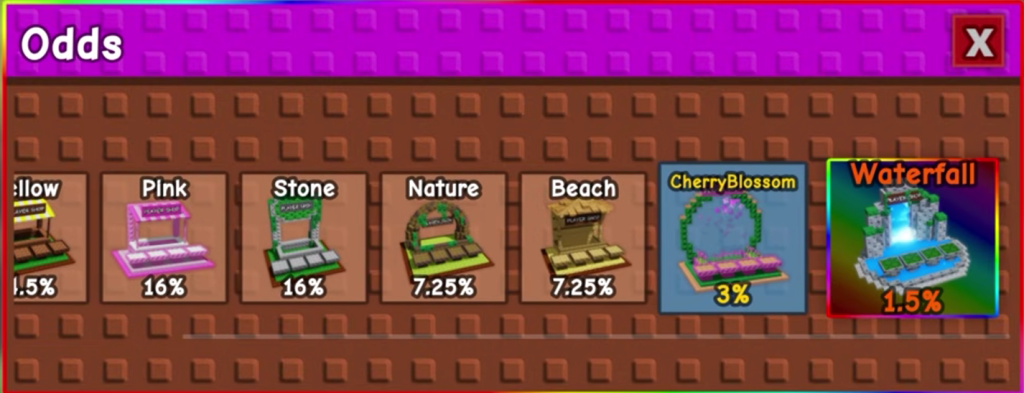
Within the Farmers Market, the “Stall” or “Booth” becomes the primary unit of player identity. The update introduces “Artisan Containers,” a loot-box mechanic that dispenses booth skins of varying rarities (e.g., Green Uncommon, Dark Stone, Waterfall, Cherry Blossom). The introduction of these containers creates a secondary cosmetic market, as confirmed by the snippets indicating that new containers and booth skins are a focal point for player expenditure alongside the functional items.
This introduces a layer of “prestige economy” into the trading experience. A player’s credibility as a merchant is no longer solely defined by their inventory but also by the aesthetic presentation of their storefront. A “Waterfall” or “Cherry Blossom” booth signals wealth and veteran status, potentially attracting more foot traffic than a default or uncommon booth. This visual hierarchy encourages players to spend tokens not just on functional assets (pets/seeds) but on cosmetic infrastructure, creating a sink for the new currency. The mechanics of the booth allow for passive commerce. Players can claim a booth, list items, and the system automates the display of goods. This transforms the trading interaction from a high-friction negotiation (requiring active chat debate) to a lower-friction browsing experience, increasing the liquidity of assets.
Furthermore, the functionality extends beyond simple sales. Players can unclaim booths at will, allowing for a fluid market where prime real estate (booths near the spawn point) becomes highly contested. While the current data does not indicate a rental fee for specific spots, the social dynamic suggests that “camping” high-traffic spots will become a meta-strategy. The integration of the booth system with the RAP index ensures that even passive sellers are providing market data, as every listing contributes to the visual landscape of prices that buyers navigate.
3. Tokenomics: The Introduction of a Hard Trading Currency
3.1. The “Trading Token” Standard
Perhaps the most significant economic alteration is the introduction of “Trading Tokens.” Unlike Shekels, which are generated through gameplay (farming), Trading Tokens are primarily introduced into the ecosystem via Robux (real-world money) purchases. This bifurcation of currency is a standard practice in mature MMO economies to prevent hyperinflation, but its implementation here is particularly aggressive.
This effectively creates a “Gold Standard” within the game. Because every Token initially represents a real-world cost, the currency resists the hyperinflation that typically plagues soft currencies like Shekels (which can be farmed infinitely). The description “Tokens can be obtained by purchasing them with Robux or by trading them with other players” establishes a closed-loop economy where the total supply of tokens is capped by player spending. Snippets further clarify that obtaining tokens is heavily gated; they are not earned through quests or chest drops in significant quantities, making the initial supply entirely dependent on early adopters willing to spend real money.
The implications of this are profound. It shifts the game from a “Time = Money” equation to a “Money = Liquidity” equation. Players who cannot spend Robux must trade their labor (farmed goods) to acquire Tokens, effectively working for the players who spend real money. This mirrors real-world labor markets and integrates the Roblox platform’s broader economy into the specific game loop of Grow a Garden.
3.2. The Liquidity Mechanism and Wealth Transfer
The Token system facilitates a direct wealth transfer between “Time-Rich/Cash-Poor” players and “Cash-Rich/Time-Poor” players. The Time-Rich players farm rare pets and fruits (Raccoons, Kitsunes) through gameplay, utilizing the offline growth mechanics that are a core feature of the game. They trade these assets for Tokens. Conversely, Cash-Rich players purchase Tokens with Robux. They trade Tokens for the rare assets they do not have time to farm.
This mechanism solves a critical issue in tycoon games: monetization fatigue. By allowing players to buy Tokens to trade for items, the developer monetizes the secondary market rather than just selling items directly. This often feels fairer to the community because the items being bought were still generated by another player’s effort, preserving the game’s integrity. It also provides a pathway for free-to-play players to access premium currency, theoretically allowing them to purchase shop items that were previously locked behind Robux, provided they can farm enough value to trade for the tokens.
However, the introduction of this system creates a risk of “pay-to-win” acceleration. As noted in community discussions regarding similar games like Pet Simulator 99, the ability to buy currency leads to market dominance by those with disposable income. In Grow a Garden, a player could theoretically bypass months of farming by purchasing Tokens and buying a full team of high-tier pets like the Gold Piggy or Chimera immediately. This compresses the progression curve, potentially reducing long-term retention for “Whales” who run out of goals to achieve.
3.3. Deflationary Measures: The Transaction Tax
The analysis of the booth system reveals a tax mechanism: “receive one token less” or a reduction in the final payout compared to the listing price. This is a classic “gold sink.” By removing a percentage or a flat rate of tokens from every transaction, the game prevents the economy from becoming flooded with currency as time goes on. Without this sink, the continuous purchase of Tokens via Robux would eventually lead to inflation, where items cost millions of tokens. The tax ensures that currency velocity (how often money changes hands) also contributes to currency destruction, stabilizing purchasing power.
While the exact percentage of the tax is not explicitly detailed in every transaction scenario, the user query mentions receiving one less token on a small transaction. If this scales (e.g., a 1% tax), it becomes a massive drain on the economy during high-value trades (like a 2,000 Token Kitsune trade). This incentivizes players to hold assets rather than constantly flip them, as high-frequency trading becomes punitively expensive due to the cumulative tax.
3.4. The Volatility of Early Adoption
The report indicates significant uncertainty regarding the initial value of Tokens. “There’s not going to be a lot of trading tokens in the economy because people will only get them from Robux”. This scarcity creates an initial period of high volatility (Asset-Rich/Cash-Poor economy). Early adopters who buy Tokens with Robux will likely possess immense purchasing power, able to buy rare pets for relatively few tokens because the supply of tokens is so low.
As the game progresses and more tokens enter circulation, the Token-cost of items will likely rise (inflation of nominal prices), even if the real value remains stable. The user query notes that trading values will “fluctuate drastically” in the first few weeks, creating opportunities for arbitrage. Snippets from community discussions highlight that prices for new pets like the “Spaghetti Sloth” or “French Fry Ferret” can drop from S-tier to D-tier value in a matter of days due to over-farming. This suggests that the Token market will be highly reactive to supply shocks, and early investors in Tokens who hold them for a few weeks might see their purchasing power diminish as the Token supply expands.
4. The RAP System: Democratizing Market Knowledge
4.1. Definition and Function of RAP
The update introduces “RAP” (Recent Average Price), a metric visible on item listings and in a dedicated “Index”. This system aggregates data from completed transactions to display the market rate for any specific item. In digital economies lacking RAP, information asymmetry prevails. Veteran players (“sharks”) exploit newer players by trading low-value items for high-value assets because the new player doesn’t know the true worth. The RAP system eliminates this asymmetry. By hovering over an item, a player sees that an Armadillo has an RAP of 2,800 Tokens, instantly alerting them if a listing of 3,000 is overpriced or a bargain.
This transparency mechanism is critical for a healthy trading ecosystem. It aligns Grow a Garden with advanced Roblox economies like Pet Simulator 99, where RAP is the standard for valuation. By integrating this directly into the UI, the developers are signaling that trading is a core pillar of gameplay, not an unsupported side activity.
4.2. The “Index” as a Valuation Tool
The dedicated “Index” button allows players to look up the RAP of every item in the game, including pets like the Raccoon, Kitsune, and Peacock. This transforms the Index from a simple collection log into a “Stock Ticker.” Players can track the rising or falling value of assets over time. The chart feature shown in the user query (y-axis value, x-axis time) allows players to perform technical analysis, identifying trends, crashes, or spikes in demand.
The Index also serves as a catalog of potential aspirations. Seeing a pet with a high RAP creates a long-term goal for a player (“I need to farm enough to buy that 5,000 Token Darkstall”). This gamifies the economy itself, turning market knowledge into a skill set. The user query notes that the index includes booth skins as well, confirming that cosmetics are fully integrated into the RAP valuation system.
4.3. Impact on “Tier Lists” and Content Creation
Historically, the community relied on static “Value Tier Lists” created by YouTubers and influencers to determine what a pet was worth. These lists were subjective and often outdated by the time they were published. The user query explicitly states: “You guys know my trading tier videos… that’s useless now.” The RAP system renders static tier lists obsolete, replacing them with dynamic, real-time data.
This shifts the community conversation from “What is this worth?” to “Why is this trending up?” It professionalizes the trading aspect, encouraging players to treat the game like a stock market. Content creators will likely pivot to “Market Analysis” videos—predicting which items will rise in RAP based on upcoming updates or meta-changes—rather than simple price guides. This has already been observed where creators analyze the rapid crash of the Spaghetti Sloth’s value, using the market data to provide retrospective analysis rather than prescriptive valuation.
4.4. Limitations of RAP and Market Manipulation
The RAP system appears to track the base version of items. It is noted that it might not account for “anything huge, Titanic, etc.” or specific variations immediately. This leaves a niche for manual valuation and negotiation regarding the ultra-rare, high-end assets, preserving some mystery and skill at the top end of the economy.
Furthermore, RAP systems are vulnerable to manipulation, a phenomenon known as “wash trading.” A group of players can trade an item back and forth at inflated prices to raise its RAP, then sell it to an unsuspecting buyer. While the snippets do not explicitly mention anti-manipulation safeguards in Grow a Garden, the existence of such issues in comparable games suggests it will be a challenge the developers must address. The volatility chart provided in the Index may help astute players spot artificial spikes, but less experienced traders remain at risk.
5. The Smithing Update: Advanced Asset Utility
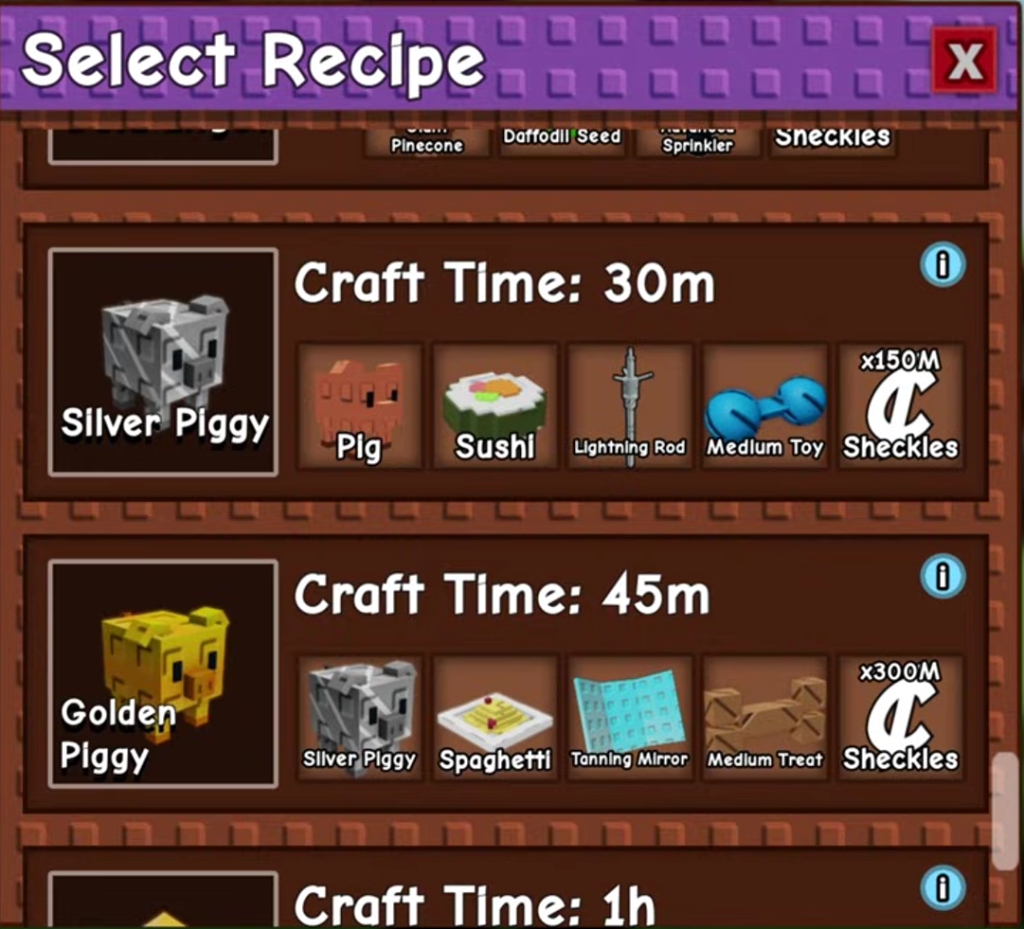
Beyond the trading floor, the update introduces “Smithing” and new crafting recipes that utilize resource sinks (Silver and Gold Ingots) to create assets with powerful passive effects. This connects the resource generation loop (farming) with the progression loop.
5.1. The Silver Piggy: Spatial Efficiency
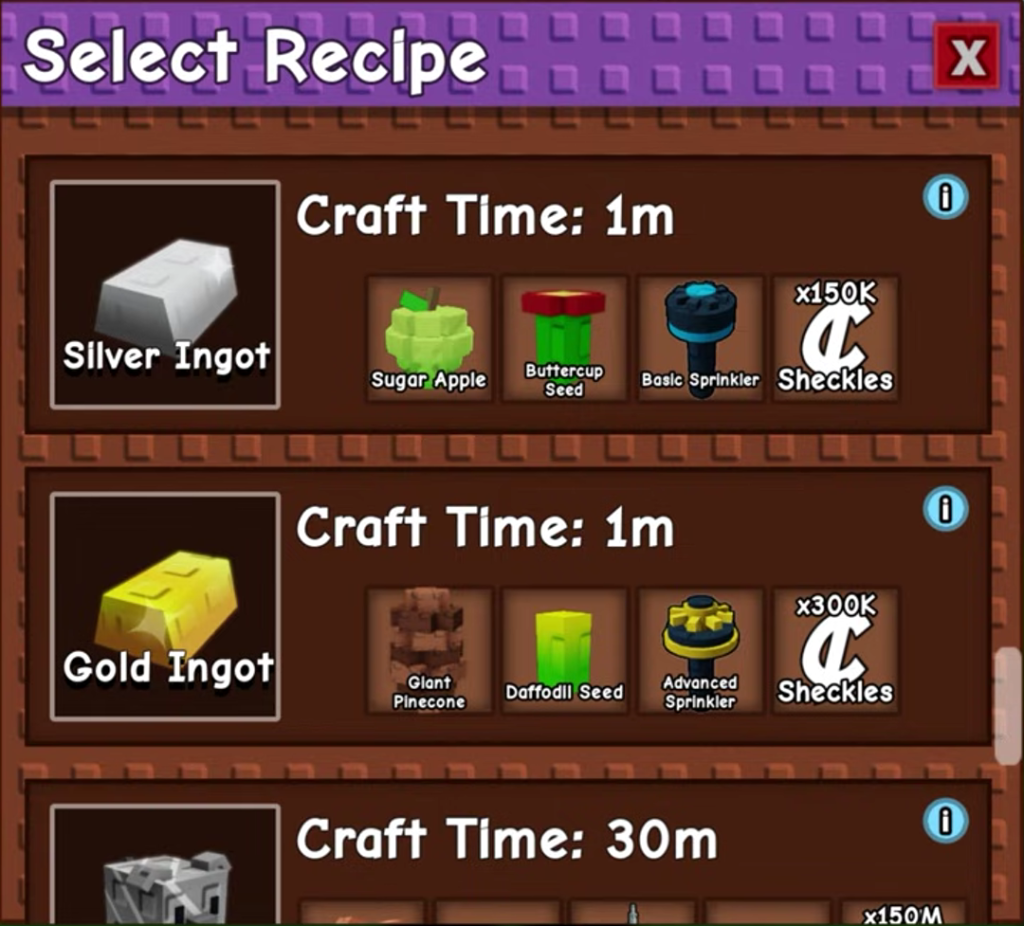
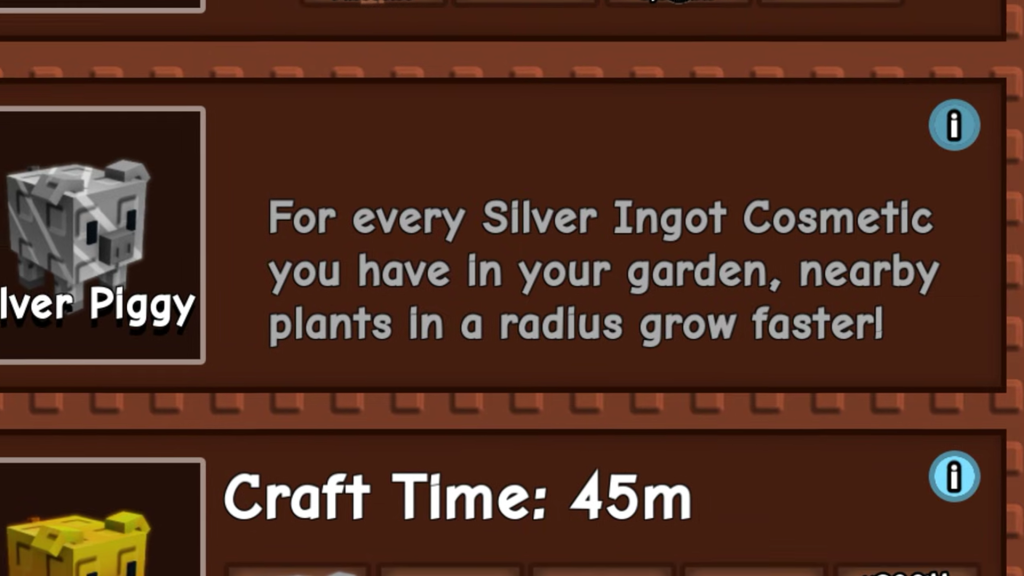
The Silver Piggy is crafted using Silver Ingots. Its utility is defined as: “For every silver ingot in your garden, you will have a radius of growing plants faster”. This creates a dependency on the Silver Ingot resource. It encourages players to stockpile ingots not just for the initial craft, but potentially to maintain or scale the buff.
This mechanic introduces a spatial strategy layer. Players must decide where to place their crops relative to their Silver Ingots to maximize the growth speed. It effectively serves as a “haste” mechanic, increasing the turnover rate of crops. In a game where offline growth is a key feature, increasing the speed of active growth phases becomes the primary method for “active” players to outperform “passive” players.
5.2. The Gold Piggy: The XP Singularity
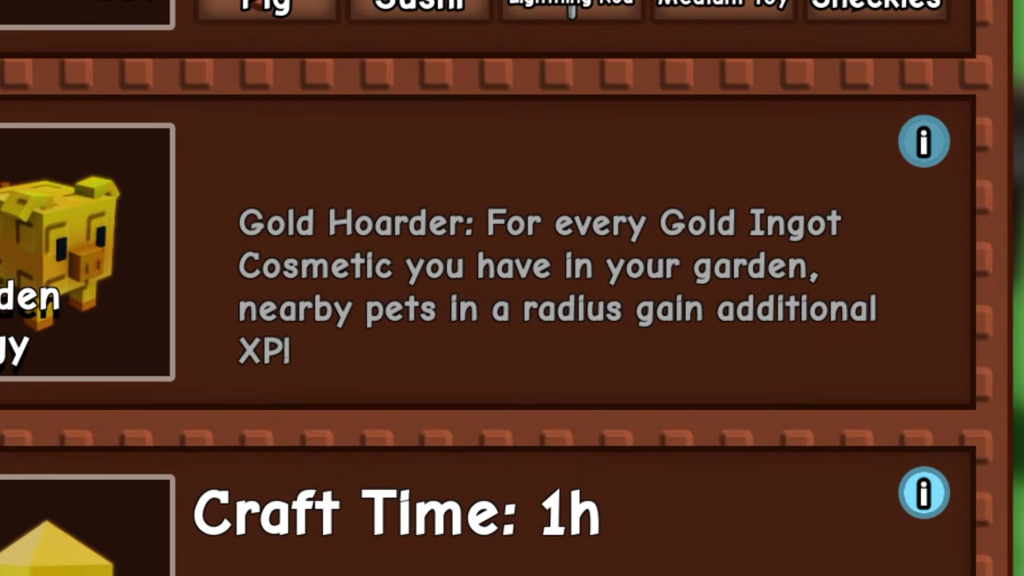
The Gold Piggy is the premium variant, crafted with Gold Ingots. Its ability is far more potent: “For every gold ingot in your garden, nearby pets gain additional XP”. The scaling factor is exponential in practice. The user query notes: “10 cosmetics makes that one XP per second… 100 gold cosmetics makes that 10 XP per second.”
This is a power creep mechanic of significant magnitude. If a player fills their garden with Gold Ingots (a “Gold Farm”), they can power-level pets at unprecedented rates. This devalues the concept of “Pet Age” or “Pet Level” as a status symbol, as it becomes trivialized by wealth (Gold Ingots). It shifts the scarcity from “Time Spent Leveling” to “Cost of Gold Ingots,” likely causing the price of Gold Ingots to skyrocket in the new Farmers Market.
This also creates a potential service economy. Players with “Gold Farms” could charge other players Tokens to stand in their garden and level their pets. This emergent gameplay loop would further integrate the social and economic aspects of the update, turning high-end gardens into service providers.
5.3. The Chimera Stone: The Apex Sink
The update introduces the “Chimera Stone,” an item that requires a fusion of four high-tier eggs: Mythical Egg, Bug Egg, Jungle Egg, and Gem Egg. This acts as a “Mega-Sink.” By requiring four distinct types of rare eggs to craft one item, the developer ensures that older content (Jungle eggs, Bug eggs) remains relevant.
High-level players cannot simply ignore lower-tier content; they must consume it to craft the Chimera. This stabilizes the value of these constituent eggs in the Trading World, ensuring that new players selling Bug Eggs still have a market of buyers among the elite players. The Chimera Stone likely summons the Chimera pet, which snippets hint is a high-status asset. The complexity of its recipe ensures it remains a long-term goal, preventing the market from flooding with Chimeras too quickly.
5.4. The Pack Mule: Scaling Production
The Pack Mule pet introduces a new variable: “Crafted pets gain bonus weight”. In Grow a Garden, weight often correlates with rarity or yield (e.g., bigger pets might have better stats or sell for more). By allowing crafted pets (like the Piggies or Chimera) to be “bigger,” the Pack Mule acts as a force multiplier.
It encourages players to obtain the Mule before engaging in expensive crafting, creating a logical progression prerequisite. This adds depth to the Smithing loop; it is not just about having the resources, but having the right “support” pets active during the crafting process to maximize the output.
6. The Role of NPC “Trader Troy” and Quest Economics
Trader Troy represents the “Quest” element of the update. He requests specific items (e.g., fruit) and provides specific rewards.
6.1. Loot Table and Resource Sinks
The rewards include Pomegranate (brand new fruit), Large Toy, Gem Eggs, Gem Chest, Wild Pineapple, and the Pack Mule. Troy acts as a “Resource Faucet” for exclusive items (Pomegranate) and a “Resource Sink” for common items. If Troy asks for 100 Apples to give one Pomegranate, he effectively scrubs 100 Apples from the economy, preventing inventory bloat.
This dynamic questing system keeps the demand for basic crops active, as high-level players may need them to satisfy Troy’s daily requests. The “Large Toy” reward is particularly notable, as toys in Grow a Garden typically interact with pets to provide XP or happiness. A “Large” variant suggests enhanced efficacy, further feeding into the pet leveling meta alongside the Gold Piggy.
6.2. Exclusive Biological Assets
The introduction of the Pomegranate and Wild Pineapple through Troy adds to the agricultural diversity. Since these cannot be bought in normal seed shops, their supply is strictly limited by the frequency of Troy’s quests and the player’s ability to complete them. This makes them ideal candidates for high-value trading items. Players who focus on completing Troy’s quests can corner the market on Pomegranates, selling them to other players who need them for collection or potential future recipes.
7. Biological Assets and Meta-Game Implications
The update and surrounding leaks point to a significant expansion in the variety of biological assets (pets and plants) available, each with specific implications for the game’s meta.
7.1. The Bearded Dragon
The inventory inspection in the user query revealed the “Bearded Dragon”. Snippets confirm this as a key pet associated with the update, alongside leaks about its abilities. While specific stats were not detailed in the query, the context of its release suggests it aligns with the new mechanics. Given the “Smithing” focus, it is plausible that the Bearded Dragon offers buffs related to resource generation (like Ingots) or crafting speed, differentiating it from standard farming pets.
7.2. Event Pets: Spaghetti Sloth and French Fry Ferret
Snippet data provides crucial context on the “Spaghetti Sloth” and “French Fry Ferret.” These pets were initially valued highly (S Tier) but crashed to D Tier within days due to over-farming. This highlights the “Event Cycle” economy. New pets are introduced with high hype, driving Token sales and trading activity. However, without strict scarcity controls, the supply quickly outstrips demand.
The existence of such “food-themed” pets aligns with the “Cooking Event” mentioned in other snippets, suggesting that Grow a Garden is adopting a seasonal content model. This model relies on a constant influx of new, temporarily valuable assets to drive engagement. The RAP system will make the lifecycle of these event pets transparent, likely shortening the window of profitability for traders as everyone can see the price crash in real-time.
7.3. Comparative Asset Valuation Table
With the new RAP system and trading mechanics, the valuation of pets and items shifts from subjective preference to objective utility and scarcity.
| Asset Class | Examples | Old Valuation Metric | New Valuation Metric (RAP Era) | Trend Forecast |
| Currency | Trading Tokens | N/A (Did not exist) | Robux Cost + Scarcity | High Volatility. Will start expensive, may stabilize as supply increases. |
| Buff Pets | Gold Piggy, Silver Piggy | N/A (New) | Utility (XP/Growth Rate) + Crafting Cost | Bullish. Gold Ingots will drive the price. Essential for “min-max” players. |
| Legacy Rares | Kitsune, Raccoon | Tier Lists | Transaction History | Correction. Overvalued pets may see price drops as real sales data is revealed. |
| Event Pets | Spaghetti Sloth, French Fry Ferret | FOMO / Hype | Market Saturation | Bearish. As seen in 1, massive farming leads to rapid devaluation. |
| Crafting Components | Gold/Silver Ingots, Mythical Eggs | Vendor Price | Demand for End-Game Crafts (Chimera/Piggy) | Bullish. Demand will outstrip supply due to the powerful buffs they unlock. |
| Exclusive Fruit | Pomegranate, Wild Pineapple | N/A | Quest Rarity (Trader Troy) | Stable. Supply is capped by daily quest limits, preventing hyper-inflation. |
8. Strategic Recommendations for Players
Based on the structural analysis of the update, the following strategies emerge for players seeking to maximize their standing in the new economy:
- Accumulate Hard Assets (Ingots): With the Gold Piggy scaling off Gold Ingots, these items will become the most liquid and high-demand commodity for high-level players. Hoarding them prior to widespread adoption of the Piggy meta is optimal.
- Leverage Arbitrage Early: In the first days of the update, the “RAP” may not have sufficient data points to be accurate. Players should look for discrepancies between the listed price and their perceived utility of an item before the market corrects itself.
- Prioritize the Pack Mule: Before crafting any permanent pets (Piggies/Chimera), obtaining a Pack Mule from Trader Troy is essential to maximize the stats (weight) of the crafted entity.
- Monitor the Index: Use the index not just to check prices, but to spot trends. If a specific egg (e.g., Bug Egg) starts rising in RAP, it implies a surge in players crafting Chimera Stones. Selling into this demand is profitable.
- Sell Event Pets Immediately: Data from the Spaghetti Sloth crash indicates that holding onto event-farmable pets is a losing strategy. They should be liquidated for Tokens immediately upon acquisition while hype is high.
9. Conclusion: The End of the Garden, The Beginning of the Market
The “Farmers Market” update is a definitive maturation point for Grow a Garden. It successfully integrates the three pillars of a sustainable MMO economy:
- Production: (Farming/Gardening – unchanged but contextualized).
- Consumption/Sinks: (Smithing, Trader Troy quests, Tax).
- Exchange: (Trading World, Tokens, RAP).
By introducing the RAP system, the developers have handed the reins of the economy to the players, allowing for a self-regulating market that relies on supply and demand rather than arbitrary developer pricing. The Trading Token system ensures the developer continues to generate revenue (via Robux sales) while facilitating a legitimate way for free-to-play players to grind their way to premium currency.
However, the update brings risks. The volatility of the Token market and the potential for P2W acceleration could alienate the casual player base. The extreme scaling of the Gold Piggy also threatens to break the game’s progression curve if not carefully managed. Yet, structurally, this update transforms Grow a Garden from a passive clicking simulator to an active, high-stakes trading floor. The players are no longer just gardeners; they are market participants, arbitrageurs, and smiths, operating in a digital economy that mirrors the complexities of the real world.
Deep Dive: The Mechanics of the New Economy
10. The “Shekel” vs. “Token” Dichotomy
The update reinforces a dual-currency system that segregates “Gameplay Wealth” from “Market Wealth.” This separation is critical for understanding the flow of value in the updated game.
10.1. Shekels: The Inflationary Soft Currency
Shekels remain the currency of gameplay loop friction. They are used for:
- Buying standard seeds.
- Unlocking garden expansions.
- Gatekeeping the Trading World: The 100,000 Shekel entry fee is the primary interaction between the two currencies.
Because Shekels are generated infinitely (faucets) through farming and have limited sinks, they are prone to massive inflation. By requiring 100k Shekels to enter the market, the game ensures that a player must participate in the inflationary loop (farming) before entering the deflationary loop (trading). This creates a baseline of effort required to participate in the “real” economy.
10.2. Tokens: The Deflationary Hard Currency
Trading Tokens are the currency of asset transfer. Their value is anchored to Robux (Real Money).
- Acquisition: Buying with Robux (Primary) or selling items (Secondary).
- Scarcity: Unlike Shekels, Tokens do not “grow on trees.” They must be injected into the economy by a paying user.
- The “Gold Standard” Effect: Because Tokens have a real-world cost, players are less likely to spend them frivolously. This makes the RAP prices in Tokens a very accurate representation of an item’s perceived real-world value.
10.3. The Conversion Problem and Codes
Currently, the user query notes “no other way of acquiring trade tokens” other than Robux or trading items. This creates a bottleneck. If free-to-play (F2P) players cannot generate Tokens through quests (Trader Troy gives items, not Tokens), the economy relies entirely on “Whales” (big spenders) to provide liquidity.
However, research indicates that promotional codes are a tertiary, albeit small, source of value injection. Codes like “RDCAward” and “BEANORLEAVE10” provide cosmetic items. While these codes do not give Tokens directly, the cosmetics they provide (like the Green Bean Chamber) can theoretically be traded (if tradable) or used to enhance the booth’s appeal, indirectly aiding in Token acquisition. The lack of direct Token codes underscores the developer’s intent to keep the currency “hard” and valuable.
11. Crafting Deep Dive: The Piggy Architecture
The crafting recipes found in the Smithing area introduce a “Build” mechanic to the game. Players must now design their garden layout not just for aesthetics or crop yield, but for “Buff Optimization.”
11.1. The Silver Piggy Radius Calculation
“For every silver ingot… radius of growing plants faster“. This implies an Area of Effect (AoE) mechanic. Players will likely construct “Silver Zones”—dense clusters of high-yield crops surrounded by Silver Ingots and a Silver Piggy. This moves the game away from uniform rows of crops to specialized “Hotspots.” This rewards players who understand spatial geometry and optimization, adding a layer of “puzzle” gameplay to the farm layout.
11.2. The Gold Piggy “XP Battery”
The Gold Piggy’s ability to convert Gold Ingots into XP suggests a new endgame: The Pet Leveling Service.
- Emergent Gameplay: Players with massive Gold Ingot collections could charge other players to stand in their garden (“AFK leveling service”). A player trades Tokens to the garden owner, enters the “Gold Zone,” and levels their pets rapidly. This creates a service economy on top of the commodity economy.
- Resource Dependency: This creates an infinite demand for Gold Ingots. Unlike a one-time craft, if the scaling is uncapped, the wealthiest players will never stop buying Gold Ingots, ensuring that beginner players who mine/farm ingots always have a buyer.
12. The “RAP” and Market Psychology
The Recent Average Price (RAP) system fundamentally alters player psychology.
12.1. Anchoring Bias
Players will now use RAP as an absolute anchor. If an item has a RAP of 5,000, selling it for 4,900 will be seen as a “deal,” and 5,100 as a “scam.” This reduces price variance. It makes it harder to find “steals” but also protects players from gross overpayment. It essentially efficiently markets the economy, reducing the spread between bid and ask prices.
12.2. Manipulation Risks and Volatility
In low-volume items (rare pets), RAP is susceptible to manipulation. A group of players could trade a specific rare pet back and forth at inflated prices to artificially spike the RAP. Snippet data highlights the extreme volatility of new items, with the Spaghetti Sloth dropping tiers in days. The RAP system will visualize these crashes, likely inducing panic selling. When players see the line graph pointing down, they will rush to sell, accelerating the crash. The Farmers Market will likely experience “Market Panics” similar to real-world stock exchanges, requiring players to have “diamond hands” or quick reflexes to survive.
13. Trader Troy: The Faucet-Sink Balancer
Trader Troy is the game’s primary mechanism for controlling the money supply (item supply).
- Input: Specific Fruit (e.g., 50 Watermelons).
- Output: Specific Reward (e.g., 1 Gem Egg).
By randomizing Troy’s requests, the developer can target specific surpluses. If data shows there are too many Pineapples in the economy, Troy can be programmed to ask for Pineapples globally, draining the surplus and raising the value of Pineapples in the Farmers Market. This makes Troy a “Central Bank” tool for managing the game’s inflation. His rewards, such as the “Gem Chest” which is speculated to contain new pets, act as a lottery ticket, incentivizing players to dump resources into the sink for a chance at a jackpot.
14. Assessment of Leaked/Upcoming Content
14.1. The Bearded Dragon and Chimera
The inventory inspection in the user query revealed the “Bearded Dragon”. Snippets confirm this as a key leaked pet. Its abilities are likely tied to the new mechanics, perhaps boosting “Smithing” efficiency or Token gain.
The Chimera, requiring the fusion of multiple biome eggs (Bug, Jungle, Mythical, Gem), represents the ultimate “Trophy Asset.” It likely serves as a status symbol with high stats, driving the demand for all sub-components.
14.2. New Fruit: Pomegranate and Wild Pineapple
These items, obtainable via Trader Troy, add to the agricultural diversity. Their exclusivity to Troy (cannot be bought in normal seed shops) gives them high inherent trading value. They will likely be used as currency for smaller trades where Tokens are too valuable to use (e.g., “I’ll trade you 5 Pomegranates for that low-tier pet”).
15. Final Verdict
The “Farmers Market” update is a masterclass in Roblox game monetization and retention design. It transitions Grow a Garden from a passive clicking simulator to an active, high-stakes trading floor. By giving every item a transparent value (RAP) and creating a currency with real-world weight (Tokens), the update validates the time players have spent grinding. Their virtual labor now has a quantifiable “stock price.”
For the player, this means the game has become more demanding but potentially more rewarding. Success now requires understanding market trends, managing asset portfolios, and optimizing garden layouts for Smithing buffs. For the developer, the Token system secures a long-term revenue stream that scales with the game’s popularity, ensuring Grow a Garden remains a titan in the Roblox ecosystem for the foreseeable future. The “Gamechanging” claim made in the user query is, by all economic metrics, accurate. The garden has grown up.
Detailed Appendix: System Breakdowns
16. System Breakdown: The Trading World (Farmers Market)
16.1. Infrastructure & Design
- Type: Publicly available Tester Server / Live Server feature.
- Layout: Circular map design to facilitate loop-walking and browsing.
- Capacity: Designed to hold high density of player booths.
- Teleportation: Requires a specific “Travel” interaction; separates trade lag from farming lag.
16.2. Booth Mechanics
- Claiming: Interaction with “Unclaimed Booth” spots.
- Customization: “Artisan Containers” (Loot boxes for skins).
- Known Skins: Green Uncommon, Dark Stone, Waterfall, Cherry Blossom.
- Economic Impact: Skins act as social proof of wealth.
- Listing:
- Select Item -> Set Price (in Tokens).
- System displays RAP (Recent Average Price) automatically on the listing.
- Tax: The seller receives the listing price minus a fee (observed as 1 token in testing, possibly percentage-based at higher values).
16.3. User Interface (UI)
- Top Menu: Tokens, Booth, Index.
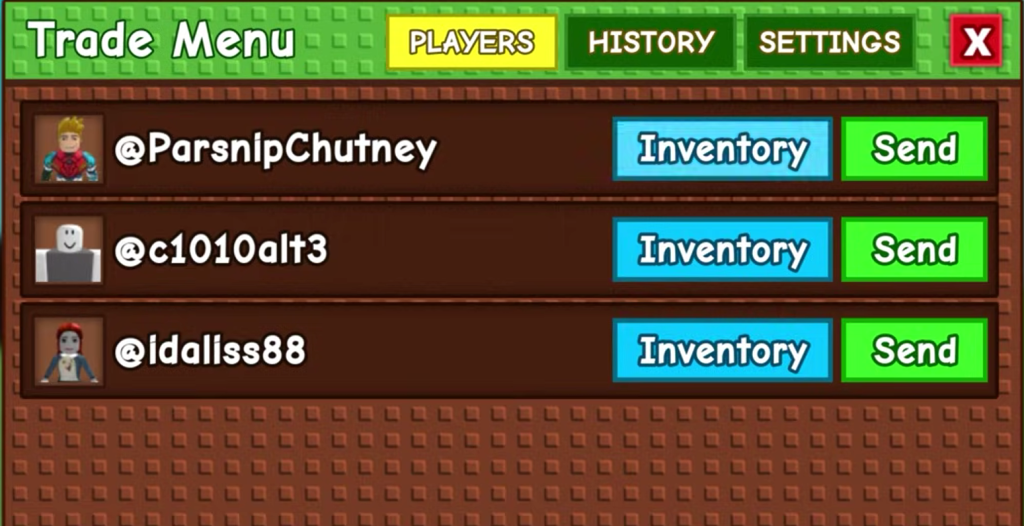
- Player Inspect: Click on player -> View Inventory -> See Pet/Plant/Fruit/Seed inventory.
- Search: Search bar for specific items (e.g., “Hydra”) within other players’ inventories.
- Friend Request: Integrated into the trading UI.
17. System Breakdown: The RAP Index
17.1. Data Visualization
- Value: Displayed in Tokens.
- Trend Line: A graph showing price history over time (x-axis: Dates like Sept 15th; y-axis: Token Value).
- Scope: Covers Pets, Plants, and Booth Skins.
- Utility: Allows players to identify market manipulation or organic growth trends.
17.2. Known Values (Pre-Stabilization)
- Note: These values are from the Tester Server and subject to massive volatility.
- Armadillo: ~2,800 Tokens.
- Tori Gate: ~4,100 Tokens.
- Fairy Stock: ~16 Tokens.
- Darkstall: ~5,000 Tokens.
- Zebra: 0 RAP (No sales yet).
18. System Breakdown: New Crafting (Smithing)
18.1. Resource Requirements
- Silver Ingot: Needed for Silver Piggy.
- Golden Ingot: Needed for Gold Piggy.
- Eggs (Mythical, Bug, Jungle, Gem): Needed for Chimera Stone.
18.2. New Pets & Items via Crafting/Troy
- Silver Piggy:
- Buff: Increases crop growth speed radius.
- Scaling: Based on count of Silver Ingots in garden.
- Gold Piggy:
- Buff: XP Gain for nearby pets.
- Scaling: 0.1 XP/sec base. Scales linearly. 100 Gold Ingots = 10 XP/sec (Massive leveling speed).
- Chimera Stone:
- Usage: Likely summons the Chimera Pet.
- Recipe: Mythical Egg + Bug Egg + Jungle Egg + Gem Egg.
- Pack Mule:
- Buff: “Crafted pets gain bonus weight”.
- Source: Trader Troy Reward.
- Meta-Usage: Must be equipped/active before crafting other pets to maximize their stats.
19. System Breakdown: Trader Troy (NPC)
19.1. Mechanics
- Interaction: “Trade?” prompt.
- Quest Loop: Asks for specific item (X quantity of Fruit Y).
- Reward Loop: Gives specific exclusive item.
19.2. Reward Pool (Confirmed)
- Pomegranate: New Fruit.
- Wild Pineapple: New Fruit.
- Large Toy: Pet interactable.
- Gem Egg: Source of Gem pets.
- Gem Chest: Container for rewards (likely gems/coins).
- Pack Mule: Functional Pet.
- Lollipops: Consumable/Currency.
- Pets: Generic pet rewards.
20. Comparative Game Analysis: Roblox Economies
To fully understand the “Farmers Market” update, one must compare it to similar systems in other top-tier Roblox games. This contextualizes Grow a Garden‘s strategic pivot.
20.1. Pet Simulator 99 (The Inspiration)
Pet Simulator 99 (PS99) is the gold standard for Roblox trading economies. It utilizes a “RAP” system and trading plazas.
- Comparison: Grow a Garden is adopting the PS99 model. The “Booth” system, RAP index, and “Hard Currency” (Tokens vs. Diamonds in PS99) are direct parallels.
- Difference: Grow a Garden retains the “Tycoon” element (Farming) as the primary generator, whereas PS99 focuses on “Hatching.” This makes the Grow a Garden economy potentially more stable, as goods take time to grow, limiting supply velocity compared to the instant hatching of pets in PS99.
20.2. Adopt Me! (The Contrast)
Adopt Me! uses a barter-only system (Item for Item) with no RAP and no currency.
- Comparison: Grow a Garden is moving away from the Adopt Me! model. The Adopt Me! model relies on social negotiation and is prone to scams (Trust Trades).
- Advantage: The Grow a Garden RAP system is safer for younger players. It removes the need to “know values” intuitively, reducing the risk of being tricked into a bad trade.
21. Future Outlook and Longevity
The longevity of the “Farmers Market” update depends on three factors:
- Token Velocity: If players hoard Tokens and stop trading, the economy stalls. The developer must ensure there are always desirable items to buy.
- Inflation Control: As more Tokens are bought with Robux, prices will rise. The “Tax” (Booth fee) must be adjusted dynamically. If inflation hits 10%, the tax might need to rise to 5% to burn more currency.
- Content Cadence: Trading economies require new “Chase Items.” If the Chimera remains the best pet for 6 months, demand will eventually flatline as everyone acquires one. New recipes using new ingredients must be introduced quarterly to keep the market churning. The mention of a “Cooking Event” with “Themed cooking pets” in snippet data suggests the developers are aware of this and have a pipeline of thematic updates to keep the market fresh.
Expanded Analysis: The Sociological Impact of the Trading Update
22. Social Stratification in the Garden
The introduction of the 100,000 Shekel entry fee and the “Artisan Container” booth skins creates a distinct class system within the game.
22.1. The “Merchant Class” vs. The “Farmer Class”
- The Farmer: Operates in the main world. Focuses on efficiency, crop rotation, and raw output. Their goal is to generate Shekels to gain entry to the market or raw goods to sell to Merchants. They are the laborers of the economy.
- The Merchant: Operates in the Trading World. Their gameplay loop is buying low (arbitrage), selling high, and social maneuvering. They may not even plant seeds anymore; their “farm” is the spread between RAP and listing price. They are the capitalists of the economy.
22.2. Signaling Theory in Booth Design
The “Artisan Containers” utilize signaling theory. A player with a “Dark Stone” booth implies they had the disposable Tokens to gamble on booth skins. This signals to buyers that this seller is “serious” and likely has high-tier stock. Conversely, a default booth might be ignored as a “noob” stall. This pushes players to invest in cosmetics purely for the economic advantage of visibility. This creates a psychological pressure to spend, not for utility, but for status, which is a highly effective monetization strategy in social games.
23. The “Pay-to-Win” Debate
The direct conversion of Robux to Trading Tokens undeniably introduces a Pay-to-Win (P2W) element, but the nuance lies in what is being won.
- Buying Progress: Yes, a player can spend $100 USD, buy Tokens, and purchase a Chimera Stone immediately.
- The Counter-Argument: However, because the items are sold by other players, that $100 USD effectively subsidizes the free-to-play player who farmed the Chimera components. The F2P player receives the Tokens, which they can then use to buy other store items.
- Verdict: It is a “Pay-to-Skip” model that redistributes wealth from Paying Users to Grinding Users, which is generally considered a healthy ecosystem model in modern MMOs. The snippet regarding Pet Simulator 99 comparisons suggests that the community is wary of “mega packs” and blatant cash grabs; Grow a Gardens approach of a player-driven economy attempts to mitigate this sentiment by keeping the value within the player base.
24. Technical Stability and Exploits
With any trading economy, technical security is paramount.
- Duplication Glitches: If a method creates “duped” Gold Ingots, the Gold Piggy scaling mechanic would break the game’s XP curve within hours.
- Cross-Server Trading: The “Trading World” is a separate server instance. Ensuring inventory data saves correctly between the “Garden World” and “Trading World” is the single biggest technical point of failure. Data loss during teleportation is a common risk in Roblox games with this architecture.
- Code Exploitation: Snippets listing expired codes indicate the developer uses codes to patch bugs or apologize for reboots (“SORRYFORREBOOTS”, “REBOOTTOFIXHUGEBUG” in related games). This suggests a reactive development style, which may struggle with the complex security needs of a real-money-adjacent economy.
25. Recommendations for the Developer
To ensure the success of this update, the following steps should be considered:
- Historical RAP Graph: Extend the RAP graph to show 30-day and 90-day trends, not just recent data.
- Buy Orders: Allow players to post “Buy Orders” (e.g., “I will buy 100 Gold Ingots for 50 Tokens each”). Currently, the system appears to be Sell-Order only. Buy Orders increase liquidity significantly.
- Dynamic Tax: If inflation rises, increase the booth tax automatically to cool the market.
- Event Rotation: Ensure that event pets like the Spaghetti Sloth are cycled out quickly to preserve some value, or provide a sink for them (e.g., trade 10 Sloths for 1 Token) to prevent them from becoming worthless clutter.
The “Farmers Market” update transforms Grow a Garden into a complex simulation of real-world market dynamics, offering depth, risk, and reward far beyond the scope of a traditional tycoon game. By bridging the gap between solitary farming and social commerce, it sets a new standard for the genre on Roblox.
Thanks for sharing. I read many of your blog posts, cool, your blog is very good. https://www.binance.com/bg/register?ref=V2H9AFPY
https://shorturl.fm/CpOn8
https://shorturl.fm/7PzZX
Your article helped me a lot, is there any more related content? Thanks!